
Good Morning!
After a week's break over the half term I am back today with the next instalment for the series on 'Plant Diseases'.
Plant disease is a fungal, bacterial or viral organism which interferes with the normal growth rate of plants, producing visible symptoms that reduce economic or aesthetic quality.
The focus of today's post is a Fungal Disease and these have visible symptoms such as -
Leaves producing spots, wilting & curled leaves, dieback, enlargements (galls) and stunted / dead plants. Some fungi's produce other visible signs such as rusts, mildew & sooty moulds.
Plant disease is a fungal, bacterial or viral organism which interferes with the normal growth rate of plants, producing visible symptoms that reduce economic or aesthetic quality.
The focus of today's post is a Fungal Disease and these have visible symptoms such as -
Leaves producing spots, wilting & curled leaves, dieback, enlargements (galls) and stunted / dead plants. Some fungi's produce other visible signs such as rusts, mildew & sooty moulds.
POWDERY MILDEW
(GREY MOULD)
(GREY MOULD)
This is a very common disease found on edible and ornamental garden plants.
You may have especially noticed it on your Sweet Peas and Roses!
 Photo from Google
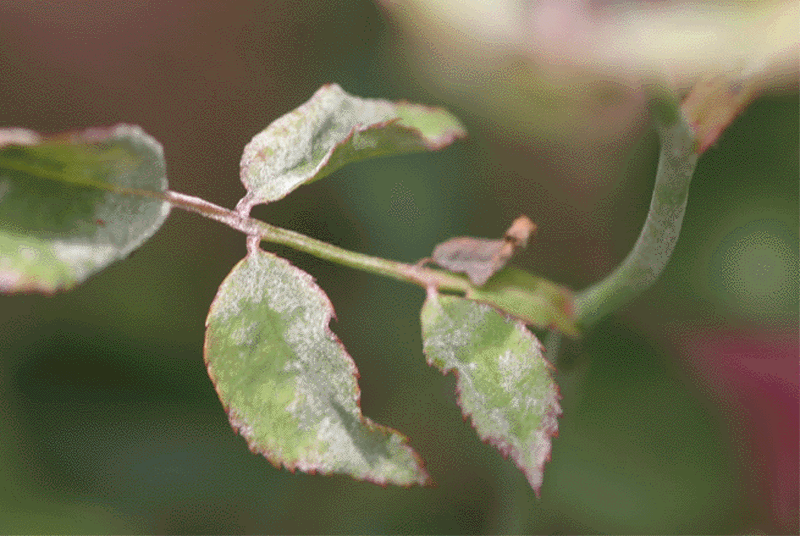
- Powdery Mildew appears in early May as irregular white mealy or felt - like patches on the surface of young leaves, stems and flower buds. This increases during Summer and will remain active into Autumn if the weather is mild. Dry weather and heavy dew on a morning can encourage the infection. If you have Roses growing on dry sites against a sunny wall they are more liable to be attacked.
- Younger leaves curl and distort and may develop a discolouration i.e turning purple or yellow.
- If your plants are badly affected the foliage will wither and fall prematurely leading to die back of the plant.
PREVENTION
You may have especially noticed it on your Sweet Peas and Roses!
SYMPTOMS
Here are a few things you can look out for ...- Powdery Mildew appears in early May as irregular white mealy or felt - like patches on the surface of young leaves, stems and flower buds. This increases during Summer and will remain active into Autumn if the weather is mild. Dry weather and heavy dew on a morning can encourage the infection. If you have Roses growing on dry sites against a sunny wall they are more liable to be attacked.
- Younger leaves curl and distort and may develop a discolouration i.e turning purple or yellow.
- If your plants are badly affected the foliage will wither and fall prematurely leading to die back of the plant.
PREVENTION
Here are a few things you can do to help prevent this ...
- Incorporate organic matter annually to the ground and giving the surface of your borders a mulch reduces moisture loss from the soil, this will help the resistance to infection.
- Ensure that you give your plants adequate watering.
- Pruning your plants will remove most of the over - wintering infections on young shoots and the tops of stems, reducing the chances of the disease. If your plant is affected make sure you remove and dispose of any affected material right away.
- Avoid excessive use of nitrogenous fertilisers, these produce soft growth which is more vulnerable to attack and ensure that adequate feeds of Potash is given to your plants.
- Try growing plants that are advertised as being resistant to Powdery Mildew.
Chemical control can be gained by using a contact fungicide, spraying periodically. If you choose to use one make sure you follow the instructions exactly and avoid using when pollinators are around.
- Incorporate organic matter annually to the ground and giving the surface of your borders a mulch reduces moisture loss from the soil, this will help the resistance to infection.
- Ensure that you give your plants adequate watering.
- Pruning your plants will remove most of the over - wintering infections on young shoots and the tops of stems, reducing the chances of the disease. If your plant is affected make sure you remove and dispose of any affected material right away.
- Avoid excessive use of nitrogenous fertilisers, these produce soft growth which is more vulnerable to attack and ensure that adequate feeds of Potash is given to your plants.
- Try growing plants that are advertised as being resistant to Powdery Mildew.
Chemical control can be gained by using a contact fungicide, spraying periodically. If you choose to use one make sure you follow the instructions exactly and avoid using when pollinators are around.
I hope you have found this helpful.
HAPPY GROWING!
XXX

